Why Your Skincare Isn't Working (Yet)

If you've ever wondered why your skincare routine isn't working, you're not alone. As an esthetician, this is one of the most common concerns I hear from clients. The surprising part? Sometimes, the products aren't the problem.
More often than not, it comes down to how the products are being used, whether they're the right fit for your skin, and having realistic expectations for how long skin actually takes to change. Healthy skin isn't built overnight. It's built through consistency, patience, and a routine that's tailored to your skin's needs.
Here are the biggest reasons I see people struggle to get results and how to fix them.
Consistency Beats Intensity
If I could only give one piece of skincare advice, this would be it:
Consistency is almost always more important than using stronger products!
I can usually tell when someone hasn't been using their skincare regularly. They'll tell me they're using their retinol or vitamin C, but when we start talking through their routine, I learn the serum they purchased nearly a year ago is still half full or the exfoliant they were supposed to use once or twice a week is only being used when they remember.
Skincare works through repetition. Active ingredients like retinol, vitamin C, and exfoliating acids gradually create change over time. Using them inconsistently is like stopping and starting a workout program every week; you're never giving your skin enough consistency to build momentum.
Imagine working out for three hours once a week versus exercising for 30 minutes most days of the week. Which approach is more likely to produce results? The shorter, consistent workouts. Skincare works the same way.
Stronger Doesn’t Mean More Effective
One of the biggest misconceptions out there is that stronger formulations are more effective. A good example of this is retinols. I hear all the time that people think using a higher strength retinol once a week is more effective than using a lower strength retinol nightly.
In reality, skin responds best when you introduce active ingredients gradually and use them consistently enough that your skin can adapt. This gradual approach helps strengthen your skin's tolerance while minimizing unnecessary irritation.
When starting a retinol, I recommend slowly increasing usage over several weeks:
Week 1 & 2: One night on, two nights off
Week 3 & 4: Every other night
Week 5+: Nightly use, IF your skin is tolerating it well
When people jump straight into a retinoid every night, it's common to experience redness, peeling, flaking, dryness, and sensitivity. Those aren't signs the product is working better; they're signs your skin barrier has been overwhelmed. Going too fast can actually slow your progress because you’re causing unnecessary inflammation. In people prone to pigment or with darker skin tones, that inflammation can contribute to post-inflammatory hyperpigmentation, making discoloration worse.
The goal isn't to use the strongest product possible; it’s is to find the strongest routine your skin can comfortably use consistently.
Unrealistic Timelines
One of the biggest reasons people give up on skincare is unrealistic expectations.
Different ingredients work on different timelines, and while you may notice small improvements early on, complete results often take much longer.
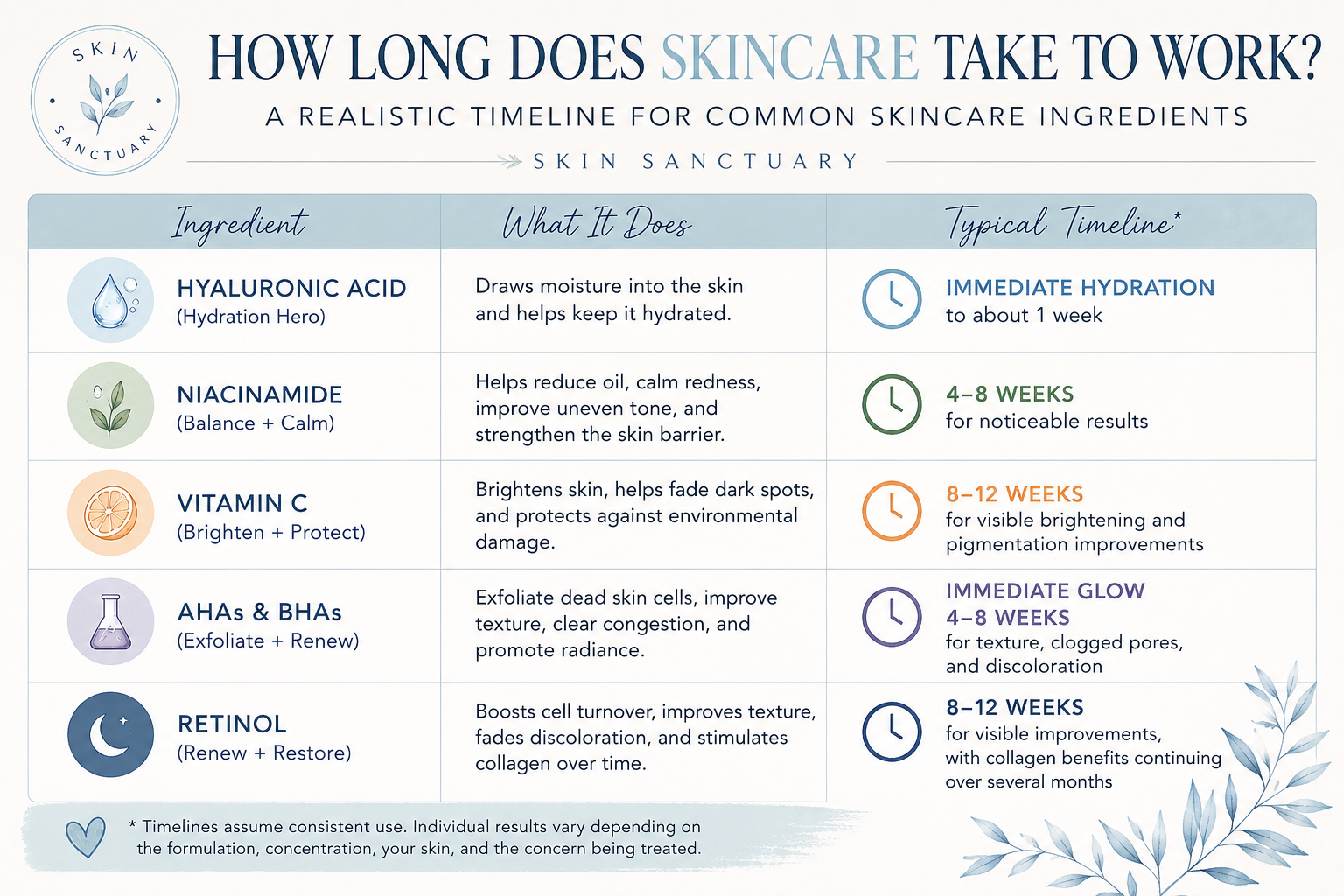
It's also important to remember that seeing improvement doesn't always mean seeing complete resolution. Sometimes the first signs that a routine is working are subtle. Maybe your skin feels less tight. Maybe your breakouts aren't as inflamed. Maybe you're developing fewer new blemishes.Those are all signs you're moving in the right direction, even if you're not at your goal yet.
This reminds me of my own experience with psoriasis. I felt like I tried every cream out there. After doing some research making significant changes to my diet, I expected to see dramatic improvements quickly. When I previously did an elimination diet, I had lost 7 pounds in 5 days because I was so inflamed from the gluten I had been consuming my whole life. I figured these dietary changes would show results just as quickly. I noticed that my skin was less itchy and inflamed the first week, but he visible plaques took much longer to shrink. It wasn't until around the three month mark that my skin was truly clear. If I had given up after just a few weeks, I would still have psoriasis today because I didn’t give my body enough time to heal. Healthy skin doesn't change overnight. It changes gradually as inflammation decreases, your skin barrier strengthens, and healthy skin cells replace older ones.
Using the Wrong Amount of Product
When products are expensive, many people try to make them last by using the smallest amount possible. Others assume using more product means they'll get faster results. Neither approach will help you reach your skin goals.
Most skincare products are formulated to work best within a certain range. Too little product will not adequately cover the skin. Too much product usually leads to unnecessary waste, and sometimes irritation, without providing additional benefits.
The goal isn't using the most product. It's using the right amount.
I experienced this myself years ago before I really knew anything about skincare. I used to think that if my skin felt dry, I simply needed more moisturizer. So I kept applying more oil-based moisturizer, but my skin never actually felt hydrated. My skin was still dehydrated and super oily from all the moisturizer that wasn’t absorbing into my skin.
Eventually, I realized my skin wasn't lacking oil, it was lacking water. Hydrating serums help draw water into the skin, while moisturizers help seal that hydration in and support your skin barrier. That's why someone can apply moisturizer over and over again and still feel dry if dehydration is the underlying issue.
Not Using Products Correctly
This is a huge one. A lot of people pick up products with trendy ingredients and they don’t know how to actually use them. It doesn’t help that a lot of brands have vague instructions on the product packaging.
I see this all the time with hyaluronic acid. This ingredient has been trending for years and you can find it practically every type of personal care product out there. Hyaluronic acid is an amazing ingredient because iit can hold up to 1000 times its weight in water. For it to be able to do this efficiently, it needs water! One tip I frequently share with clients is to apply products containing hyaluronic acid to damp skin. Hyaluronic acid serums work best when it has water available to bind to and then sealed in with a moisturizer.
Again, it's not about using more product; it’s about using the product with the correct supporting ingredients.
Your Skin Changes So Your Routine Should Too
Another mistake I see often is people continuing to use products that no longer match their skin.
For example, someone may have struggled with acne as a teenager and still be using a benzoyl peroxide or salicylic acid cleanser twenty years later, even though their skin is now dry, sensitive, and showing signs of aging. These ingredients aren't bad, but simply no longer the best choice for that person's current skin concerns.
Your skin changes throughout your life because of:
Age
Hormones
Stress
Climate
Medications
Lifestyle
Seasonal changes
The routine that worked five years ago may not be the routine your skin needs today. Likewise, what works for your friend, or what's trending on social media, may not be right for your skin. Personalized skincare produces better results than simply following trends.
Your Skin Doesn't Exist in a Vacuum
While skincare is incredibly important, it's only one piece of the puzzle. Your skin is influenced by many factors, including:
Sleep
Stress
Nutrition
Hormones
Medical conditions
Medications
Sun exposure
Daily habits
A great skincare routine can absolutely improve your skin, but it's important to recognize that topical products can only do so much if something else is contributing to the problem. This doesn't mean skincare isn't effective; it means your skin reflects your overall health. Taking care of your skin means taking care of your body too!
One of the biggest misconceptions about skincare is that if you don't see dramatic results within a few weeks, your products aren't working. In reality, skin simply doesn't change that quickly. Good skincare isn't about buying the most expensive products or using the strongest ingredients.It's about giving your skin the right ingredients, in the right amounts, consistently, for long enough to let biology do its job.
If your routine doesn't seem to be working yet, ask yourself:
Am I using my products consistently?
Am I using the correct amount?
Are these products still appropriate for my skin?
Have I given them enough time to work?
Am I supporting my skin with healthy habits beyond skincare?
Sometimes the smallest changes make the biggest difference! And if you're still feeling overwhelmed, remember you don't have to figure it out alone. A in-person or virtual personalized skin care consultation at Skin Sanctuary can help identify what's holding your skin back and create a routine designed specifically for your skin, your lifestyle, and your goals.