Skin Care Red Flags
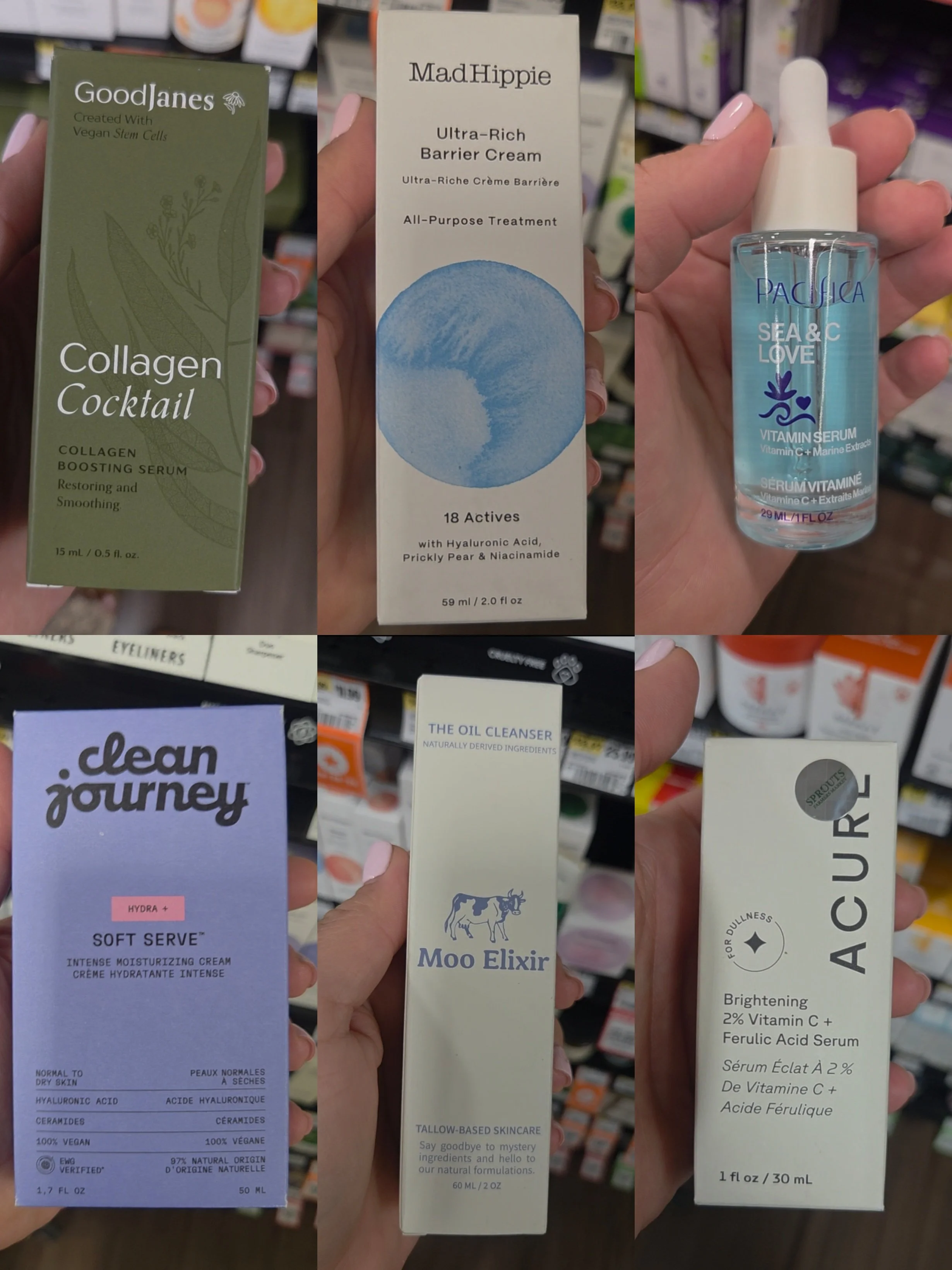
The products shown are examples of common marketing tactics I spotted during a single trip to a local store. This blog is about learning how to look beyond the marketing and ask questions about the effectiveness of products
One of the questions I hear all the time is, "What do you think about this skincare product?" or "Is this brand any good?"
The truth is, there are thousands of skincare brands on the market, and I haven't personally researched every single one. I spend a lot of time researching ingredients and learning about the brands I choose to carry because I want to feel confident recommending them to my clients.
When someone asks me about a product I'm unfamiliar with, I look at the packaging and the ingredient deck quickly so I have some feedback. While it isn't always possible to determine whether a product is truly effective just by looking at the label, ingredients, or the marketing, there are certain claims and practices that immediately make me ask questions…
🚩Chemical Free
This is my biggest skincare pet peeve! Everything is made of chemicals, including water, aloe vera, vitamin C, and the air we breathe. So when a product claims to be "chemical free,” it immediately makes me question whether the brand understands basic chemistry or is purposedly using fear based marketing tactics to sell their products.
There is a difference between naturally occurring ingredients and synthetic ingredients, but both are made up of chemicals. The word chemical doesn't tell you anything about whether something is safe or unsafe.
Bottom Line: Nothing is chemical free; it’s a made up marketing term that doesn’t accurately tell you the science behind the formulation.
🚩Natural
Another common marketing claim is “natural.” While ingredients derived from nature can certainly have benefits, natural doesn't automatically mean safer or better.
Poison oak is natural. Arsenic is natural. Tobacco is natural. All these things are not good for our bodies.
At the same time, many ingredients created in a laboratory are totally safe. They’re carefully tested, purified, and incredibly effective in skincare.
Bottom Line: Instead of asking whether a product is natural, ask whether it contains clean ingredients, is well formulated, backed by research, and appropriate for your skin type and concerns.
🚩 Contains [Trending Ingredient]
Just because an ingredient is listed on the front of the bottle doesn't mean it's doing much for your skin. Many products advertise a trendy ingredients while containing only a very small amount or even just a derivative of that ingredient that isn’t as effective clinically. In skincare, effectiveness depends on much more than simply adding an ingredient to a formula:
Is the ingredient present at an effective form and concentration?
Is the ingredient stabilized?
Is the packaging protecting the product from light and air?
Does the formula have a delivery system to help penetrate your skin?
Bottom Line: Great skincare is about formulation, not just ingredient lists.
🚩More Doesn’t Mean Better Results
Brands have started listing the active ingredient percentages on the front of the bottle because this makes it look like the product is more effective. The problem is that the average consumer doesn’t know what percentages to look for. And, more isn’t always better, especially when starting a new active ingredient in your skincare routine. The right percentage depends on many factors: what is the form of this active ingredient, what skin concern is this treating, what else is in the formula, what percentage is this ingredient clinically effective at, etc.
Niacinamide is a good example of this. It's an ingredient that's been shown to be effective at relatively low concentrations, you'll often see products advertising high concentrations, like 10%. Bigger numbers make great marketing, but they don't automatically make a better product. In fact, higher concentrations can increase the risk of irritation and skin sensitivity without providing additional benefits.
Bottom Line: Don’t fall for big numbers on the bottle. Effective skincare is about the right percentage in the right formulation and your skin’s tolerance.
🚩Instant Results at a Bargain Price
We've all seen the infommercials promising dramatic results for an unbelievably low price. While there can be affordable products that perform well, it's worth being cautious when something promises to erase wrinkles, lift skin, fade pigmentation, clear acne, and transform your complexion almost overnight for an incredibly low price.
Developing quality skincare takes investment: research, testing different formulations, high quality raw materials, protective packaging, advanced delivery systems, etc. This all adds to the cost of creating an effective product; you just can’t do all that with a bargain priced product, especially when you have an huge budget put towards advertising.
Bottom Line: If the promises sound too good to be true, they most definitely are!
🚩Buying Skincare from Unauthorized Sellers
Finding a luxury skincare product at a huge discount can feel exciting, but it also comes with risks. When products are purchased through unauthorized retailers, online marketplaces, flea markets, or unknown third-party sellers, there's often no way to verify where they came from, what’s actually in them, or how they've been stored. Even authentic products can lose effectiveness if they have been sitting around for awhile or if they've been exposed to heat, cold, light, etc.
Active ingredients, like vitamin C, naturally become less effective as they age, especially if the formula hasn't been stored properly. Vitamin C is an antioxidant, meaning its job is to help neutralize free radicals that contribute to premature skin aging. However, once vitamin C oxidizes, it loses its effectiveness and contributes to oxidative stress rather than helping protect your skin. Instead of getting the benefits you paid for, you could be applying a product that's well past its prime and is aging your skin.
Bottom Line: Purchase from authorized retailers so that you receive fresh, authentic inventory.
🚩Clean at [Insert Brand Here]
Today you'll see products labeled as "clean" at nearly every major retailer. The problem is that clean doesn't have one universal definition. Different stores and brands all have their own ingredient standards and philosophies. There are also third-party certification badges on many products that have various certification standards. A badge can be a helpful starting point, but it doesn't tell the whole story.
Personally, I want to know what standards a brand follows, how they source and formulate their products, and why they choose to include or exclude certain ingredients, It’s also important to note that clean doesn’t automatically mean effective; again, this comes down to formulation.
Bottom Line: Don’t blindly trust a marketing badge but rather research what that badge actually means.
🚩Lack of Brand Transparency
This may be the biggest red flag of all! No brand is perfect, and not every ingredient has a simple yes or no answer, but I do believe brands should be willing to educate consumers and professionals when questions about ingredients and formulation come up.
Over the years, I've had clients with ingredient sensitivities and allergies who needed more information than what was listed on the label. The brands I use and trust have been willing to provide additional details to help determine whether a product was appropriate for that individual or not.
If every question is met with "it's proprietary," or a company avoids providing ingredient lists and product information clearly online, don’t settle for a product that won’t give you the whole story.
Bottom Line: Transparency builds trust. Purchase from brands with integrity that will provide honest information and answer your questions.
The Takeaway
Marketing is designed to catch your attention and get you to buy that product, but great skincare is about much more than clever labels and trendy buzzwords.
Instead of asking whether a product is "chemical free," "natural," or "clean," ask better questions.
Is the brand transparent?
Is the formula thoughtfully designed?
Is the product backed by research?
Is it packaged to protect the active ingredients?
Can the company explain why they formulated it the way they did?
As an esthetician, my goal isn't to recommend products based on marketing trends. It is to recommend products that are thoughtfully formulated, backed by science, and aligned with the standards I feel confident putting on my skin and my client’s skin.
The more informed you are as a consumer, the better choices you'll make, not because of what's printed on the front of the bottle, but because you understand what really matters!
Have Questions About Your Current Skincare?
With thousands of skincare products on the market, it's easy to feel overwhelmed by flashy marketing claims and conflicting advice. You don't have to figure it out on your own.
If you're in San Jose or the surrounding Bay Area, schedule a product consultation at Skin Sanctuary. Bring in your current products, and we'll go through them together. I'll help you understand what's working, what isn't, and recommend a routine that's based on your skin's unique needs, not marketing buzzwords.
Not in the area? We can still do a product consultation virtually. Just send me an email to set up your appointment!
Your skin deserves more than clever packaging and trendy claims. Let's build a routine you can feel confident about.