When most people think about skincare, they usually think about cleansers, toners, serums, moisturizers, and sunscreens… But skincare does not stop there!
What you put on your face after your morning routine matters too. Whether you wear a full face of makeup every day or only put it on for special occasions, that makeup is sitting on your skin for hours. It should support your skin, not work against it.
You can have a beautiful skincare routine, invest in professional treatments, and use amazing products at home, but if you are applying heavy, pore-clogging, irritating makeup afterward, you will not be getting the full benefit of all that work.
Prestige Does Not Mean Better
I used to think that if makeup was expensive, sold at Sephora or a department store counter, or had a designer brand on the packaging, it had to be a better option. I learned the hard way that this isn’t true.
“Prestige” is essentially an industry label for higher priced makeup sold through certain retailers. It does not mean that is automatically a better choice for your skin. Prestige does not mean that a product is clean, that it has better ingredients, or that it actually works.
A brand can have a high price tag, beautiful marketing, free samples, and a huge display at a major beauty retailer while using questionable ingredients that are not doing any favors for your skin.
I have been there myself. There were brands I used to be excited about because I thought they were better options. I thought that if it was expensive, it meant quality. When I read the ingredient lists after I started paying attention to what was in my products, I was shocked. What was even more shocking was reading third-party testing results showing harmful ingredients that aren’t listed on the makeup labels.
That is why I encourage people to look beyond the claims on the front of the package and learn what ingredients are in their products and how those products are being tested by the brand.
Clean Does Not Automatically Mean Pure
Ingredient lists matter, but purity matters too. A product can use a botanical, mineral, or plant-derived ingredient and still have contamination concerns. Where an ingredient is grown, the quality of the soil and water, how it is harvested, how it is processed, and how it is stored can all affect the final product. “Natural,” “organic,” or plant-based does not automatically mean pure.
That is why testing is so important. A company should not only choose better ingredients, but also test those ingredients for purity before they ever go into a formula. The finished product should also be tested because contamination can happen at multiple points during the manufacturing process.
What Is Not on the Label Matters Too
An ingredient list tells you what a company intentionally puts into a product. It does not necessarily tell you what contaminants may be present in the raw materials, pigments, minerals, or final formula.
Cosmetics can test positive for trace heavy metals such as lead, mercury, arsenic, cadmium, chromium, nickel, and cobalt. These are not usually intentionally added ingredients, which is why you will not see them listed on the label. They can enter a formula through contaminated raw materials, mineral pigments, poor sourcing, or inadequate manufacturing and testing.
The lipstick and lead conversation is probably the most well-known example. Lead has been found in lipsticks, lip glosses, eye shadows, blushes, compact powders, and other cosmetics. The FDA has tested hundreds of products and found that highly pigmented makeup, including eye shadows, blushes, and powders, can contain higher levels because of the mineral fillers and pigments used in those formulas.
The Claire’s makeup recall is another example of why testing matters. In 2019, FDA testing found asbestos in certain Claire’s eye shadows, compact powders, contour palettes, and a JoJo Siwa makeup set marketed to children. Asbestos was not listed on the label because it was not an intentional ingredient. It was contamination associated with talc in the products.
This is why I do not just look at an ingredient list. I want to know whether a brand is testing its raw materials and finished products for purity and contaminants. “Natural,” “mineral-based,” or “plant-derived” does not automatically mean pure or safe.
Ingredients to Avoid in Makeup
I often get asked what ingredients people should avoid in makeup. Here are the top ingredients I look for when evaluating a makeup formula:
Talc
Talc is common in powders, blushes, bronzers, eyeshadows, and other color cosmetics because it helps create that silky, smooth finish. It is one I personally avoid in all my products, but it is especially important to avoid in loose powder products because of inhalation risk. Talc has been a concern for years because of asbestos contamination. I’m sure you’ve heard about the Johnson & Johnson ovarian cancer lawsuit; talc is the ingredient in question. Johnson & Johnson has paid out billions across verdicts and settlements and asbestos is a known carcinogen, yet it’s still widely used in the products of many brands, yes, even those prestige ones. When there are great talc free options like mica and arrowroot available, why not choose those instead?
Mineral Oil
Mineral oil is another ingredient to avoid in makeup. I just did a whole blog post on it last month so be sure to check that out! Mineral oil can’t be absorbed by the skin, which makes it better suited for makeup than skincare, but that still doesn’t make it a good option. Makeup that contains mineral oil feels heavy and greasy on your skin, is prone to clogging pores, and can aggravate acne. I actually used to use a prestige brand of eyeshadow that contained mineral oil when I was younger because of the high pigment content. I would often get styes on my eye area. As soon as I switched to a mineral oil free brand, I haven’t gotten a single stye! Bottom line: If you deal with congestion, breakouts, or makeup that never seems to sit right, it is worth checking whether mineral oil is actually in your foundation, concealer, primer, and cream-based products.
Coal Tar Colorants
Coal tar colorants are another ingredient category to avoid. You may see them listed on ingredient labels as coal tar or as certain synthetic color additives identified with FD&C or D&C names. Coal tar is a complex by-product of petroleum or coal that contains known carcinogens, such as polycyclic aromatic hydrocarbons (PAHs) and benzene. Coal tar can even cause side effects like sun sensitivity, staining, and skin irritation. Opt for cosmetics that contain plant-based pigments and mineral colorants.
Parabens & Formaldehyde Releasers
These are preservatives found in many personal care products to prevent bacterial growth. Parabens, including methylparaben, propylparaben, butylparaben, and ethylparaben, are used to extend shelf life but are hormone disruptors that can mimic estrogen in the body.
Formaldehyde releasers release formaldehyde over time to preserve a product. Formaldehyde is a known human carcinogen and can also contribute to irritation, redness, itching, and allergic reactions. Look for names like DMDM hydantoin, imidazolidinyl urea, diazolidinyl urea, quaternium-15, bronopol, and sodium hydroxymethylglycinate, especially in products used close to the eyes.
Better alternatives to these ingredients include phenoxyethanol, sodium benzoate, potassium sorbate, caprylyl glycol, ethylhexylglycerin, and fermented ingredients. These preservation systems generally make up less than 1% of a product’s formula and help keep products safe and stable.
Fragrance, Perfume, and Phthalates
These are ingredients I always look for on a label. Unlike most ingredients, a brand can list fragrance as one word without disclosing the individual chemicals that create that scent because the formula is considered a trade secret. That means fragrance can be a hidden source of phthalates. Phthalates are chemicals used to help fragrance last longer, and some are associated with hormone disruption and reproductive health concerns.
Fragrance can also be synthetic, naturally derived, or a combination of both. Natural fragrance does not automatically mean you know exactly what it contains. If a product includes fragrance, the brand should tell you where it is derived from. If a brand is not fully transparent about its formula, that is a red flag for me.
For anyone with sensitive skin, acne, eczema, rosacea, headaches, or reactive eyes, fragrance can also be a major source of irritation. When in doubt, choose fragrance free products without fragrance masking ingredients, or brands that fully disclose the origin of their fragrance ingredients.
Skincare Disguised as Makeup
After learning more about what can be hiding in makeup, I knew I wanted products that did more than simply cover my skin. I found Arbonne and fell in love with their products; I’ve been using them for almost 12 years! I often describe it as skincare disguised as makeup. It gives you the coverage and polished finish you want, but the formulas also include skincare ingredients that support your skin while you wear them.
For me, Arbonne’s philosophy of Pure, Safe, and Beneficial is more than just a tagline. The pure and safe pieces were what first made me feel confident in the brand. Arbonne does not just choose ingredients based on what looks good on a label. They screen and assess their raw ingredients, test finished products, formulate without more than 2,000 ingredients on their Not Allowed List, and back their products with clinical research. They also have a Scientific Advisory Board that helps guide product development and education.
That level of testing and accountability matters to me. Especially after learning that contaminants may not always show up on an ingredient label, I want to know that the company behind my makeup is doing more than the bare minimum.
And of course, the products have to perform. People often ask me whether I even wear foundation because my skin looks so natural. The answer is yes, I wear it almost every day. I just do not want foundation that looks or feels like a heavy layer sitting on top of my skin. I want lightweight, buildable coverage that evens everything out while still letting my skin look like skin.
When you wear makeup, it sits on your skin for hours. Whether it is your everyday foundation and mascara or makeup you put on for a wedding, holiday party, photos, or a night out, you want those products to support your skin instead of working against it. The makeup you choose can absolutely make or break your skin.
Prep Is Everything
Beautiful makeup starts before you open your makeup bag. If skin is dehydrated, flaky, irritated, or covered in buildup, makeup is more likely to cling to dry patches, settle into fine lines, separate throughout the day, or look heavy. No foundation can fully cover up skin that has not been properly prepped.
Start with your skincare. Cleanse, hydrate, moisturize, and wear SPF. Regular exfoliation will also help keep skin smooth and allow makeup to apply more evenly, but it is important to use the right formula and not over exfoliate, because that can lead to more texture.
Do not forget your lips either. Hydrating your lips before lip color helps lipstick, gloss, and liner apply more smoothly instead of catching on dry texture or settling into lines.
A Primer You Can Wear With or Without Makeup
Primer is one of my favorite products because it is not only for people who wear foundation. Think of it as the final step in your morning skincare routine. It creates a smoother, more hydrated finish, helps soften the appearance of fine lines and texture, and gives your skin a polished look even on no makeup days.
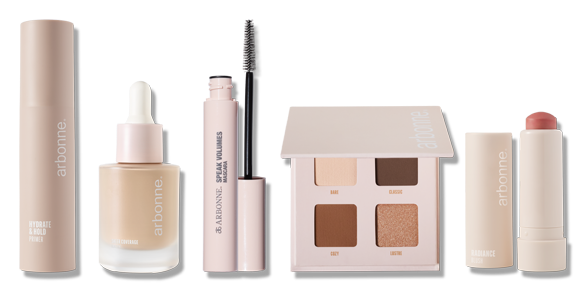
I have had people try the Hydrate & Hold Primer on the back of one hand while leaving the other hand bare at the spa, and they can immediately see and feel the difference. The skin looks smoother, softer, and more even instantly. What makes this primer unique is that it doesn’t contain silicones, which allows the skincare ingredients in the other makeup products to be fully delivered into your skin!
If you do wear makeup, primer creates a better canvas so foundation applies more smoothly and lasts longer throughout the day. But even if you do not wear foundation, it is still a beautiful product to use after your skincare for a soft, perfected finish.
The Perfect Base
Arbonne’s Natural Glow Foundation gives beautiful, natural-looking coverage while also including skincare ingredients that support the skin. Hyaluronic acid helps support hydration, so skin looks fresh rather than dry or cakey. Vitamin C helps support a brighter-looking complexion. Ceramides help support the skin barrier. It is lightweight, buildable, and easy to customize. You can use a small amount for a natural everyday look or build more coverage where you want it without feeling like you are wearing a mask.
If you do not love the feeling of foundation or want a true no makeup makeup look, the Arbonne Sheer Coverage Skin Tint is such a good option. It is incredibly lightweight, and its green tint helps neutralize the appearance of redness with only a few drops. It does not give you that heavy, makeup-on-top-of-your-skin feeling. It simply helps your skin look more like your best skin.
I have had so many people tell me they hate the feel of makeup, then be surprised by how lightweight this is. It is perfect for everyday wear, quick errands, work, or anyone who wants to look a little more even and polished while still looking completely natural.
One of the biggest makeup mistakes I see with face products is the wrong application technique. The answer is not more or thicker product; it’s smarter application. Instead of applying a thick layer everywhere, start with less than you think you need and add more only where you want it. A damp makeup sponge is best because it gives a soft, airbrushed look by lightly pressing and diffusing the product into the skin. The goal is for your makeup to look like healthy, even skin, not like something sitting on top of your face.
Pro Tip: When choosing foundation, make sure you are matching it to your neck and chest, not just your face or hand. Your face can naturally be lighter than your body if you wear SPF consistently, avoid sun exposure, self-tan, or get more color on your body during summer. Matching your complexion makeup to your body helps everything look seamless.
A Dot of Concealer Does A Lot
People make the mistake of buying a thick concealer thinking it will cover their dark circles better but in reality, thicker products don’t create flawless finishes. And adding more concealer makes it worse and does not automatically mean more coverage. A large swipe or thick triangle of concealer under the eyes generally becomes cakey, settles into fine lines, and brings more attention to texture.
Instead of using a heavy formula, try The Real Conceal Liquid Concealer. Place a small dot at the inner corner of the eye and another at the outer corner, then gently blend. That gives brightness where most people need it without overloading the delicate under eye area with too much product.
It’s All About Placement
If you want to enhance your natural features, it’s all about placement! For blush, I recommend Radiance Blush because it’s a lightweight, buildable formula that contains antioxidants. Placing blush higher on the cheekbones instead of directly on the apples of the cheeks creates a more lifted, modern look
I use what I call the two- or three-finger rule. If you have a rounder face shape, leave about three fingers of space between the side of your nose and where your blush begins. If your face is less round, two fingers of space usually works well. This keeps the color lifted instead of bringing it too far into the center of the face.
Bronzer is also about placement, not putting color all over your face. When I was younger, I used to put bronzer everywhere because I wanted to look very tan. Now, I use Sun Kissed Bronzer more intentionally: around the hairline, lightly on the cheekbones, and in the areas where the sun would naturally hit. Depending on your face shape, you can also use it along the sides of the nose and under the jawline for more warmth and definition.
For eyeliner, make sure the outer corner flicks upward rather than downward. A soft upward lift at the end of the eye can help the eyes look more awake, while liner that pulls downward can make the eyes appear more droopy. It’s A Fine Line Pencil Eyeliner is my go to eyeliner because it’s highly pigmented, smudge-resistant and even contains a sharpener on the top of the pencil.
Mascara is one of those everyday products that can make a huge difference with very little effort. Even people who do not wear foundation, blush, or a full face of makeup will often put on mascara because it helps the eyes look more open, awake, and defined.Because it is applied so close to the eyes, I think mascara is one of the most important products to choose carefully. You want a formula, like Speak Volumes, that gives you length, definition, and wear without irritating your eyes or being so difficult to remove that you are tugging at your lashes and delicate eye area every night.
Choose Colors That Complement Your Skin
Color theory matters in makeup too. Foundation should match both your skin color and your skin undertone. The right shade should blend into your neck and chest without leaving an obvious line of demarcation. If your foundation looks too pink, yellow, orange, gray, lighter, or darker than the rest of your body, it is not the right match.
Warm, cool, and neutral tones also matter in blush, lip color, bronzer, and eyeshadow. The right shades can make your complexion look brighter, healthier, and more even. With eye makeup, lighter and softer shades can help smaller eyes appear more open. Darker eye looks can be beautiful, but overly dark or heavy application can sometimes make eyes appear smaller or create a harsher look.
I still love a little color sometimes, but for an everyday look or a holiday event, soft neutrals and muted tones are usually the easiest way to create something polished, flattering, and timeless.
Set Your Makeup Without Overdoing It
Powder can be helpful, but too much powder can make makeup look dry or settle into fine lines, especially if you already have dry skin. Focus powder only where you tend to get shiny. If you don’t have oily skin or get shiny, skip the powder. Always finish with a setting spray to extend the wear of your makeup. I love using Cosmedix’s Mystic. It’s actually a moisturizer too!
Skip Waterproof Makeup
Waterproof makeup has a purpose. If you are performing in a pool, like synchronized swimmers, or you truly need makeup to survive water, sweat, and extreme conditions, I understand why you would reach for it for that occasion. But for everyday makeup, your mascara, eyeliner, or foundation should not need to survive chlorine, tears, sweat, rain, etc. without budging. Makeup is meant to come off at the end of the day.
Waterproof formulas are designed to form a stronger, more water-resistant film on the skin and lashes. That is why they can be so difficult to remove. The problem is that people often end up rubbing, tugging, and pulling at their skin, especially around the delicate eye area, just to get the product off. That extra friction can lead to irritation, redness, lash breakage, and more stress on the skin, especially around the eyes.
Don’t Skip Makeup Removal
Sleeping in your makeup is one of the fastest ways to work against your skincare routine. Throughout the day, makeup mixes with oil, sweat, sunscreen, dirt, and environmental pollution. When you leave that on your skin overnight, you are giving it hours more time to sit in your pores, transfer onto your pillowcase, and contribute to congestion, breakouts, irritation, and dullness. It can also make fine lines and texture look worse over time, especially if you are regularly rubbing at your eyes or not fully removing mascara, eyeliner, and foundation before bed.
I often see people who think they removed all of their makeup, but there is still foundation, mascara, sunscreen, or other residue left behind on the skin. Sometimes someone tells me they did not wear makeup that day, but I can still see makeup coming off during their facial because it was left behind from the night before.
Your nighttime routine does not have to be complicated, but makeup needs to come off. Start with an oil cleanser or cleansing balm to dissolve makeup and sunscreen, then follow with your regular cleanser so you are actually going to bed with clean skin. Taking a few extra minutes to cleanse thoroughly is one of the simplest things you can do for your skin!
Need Help Finding The Right Makeup?
Makeup is not one-size-fits-all. The right foundation shade, undertone, coverage level, blush placement, and lip color can make all the difference. If you want help building an easy makeup routine, finding your foundation match, or choosing shades that complement your skin tone, I offer personalized makeup consultations with color matching at Skin Sanctuary in Downtown Willow Glen. We can talk through what you currently use, what you want help with, and create a routine that feels natural, easy, and right for you.